

বাংলাहिन्दी
Store LocatorProblemI spent a fortune on this premium flooring. Why does it sound hollow and keep popping up?

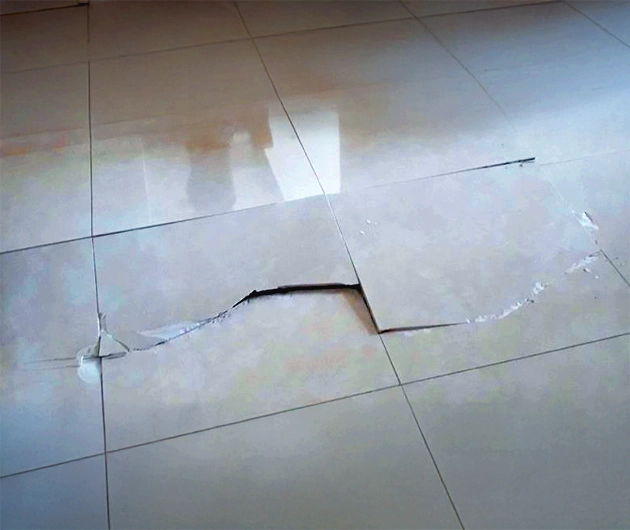
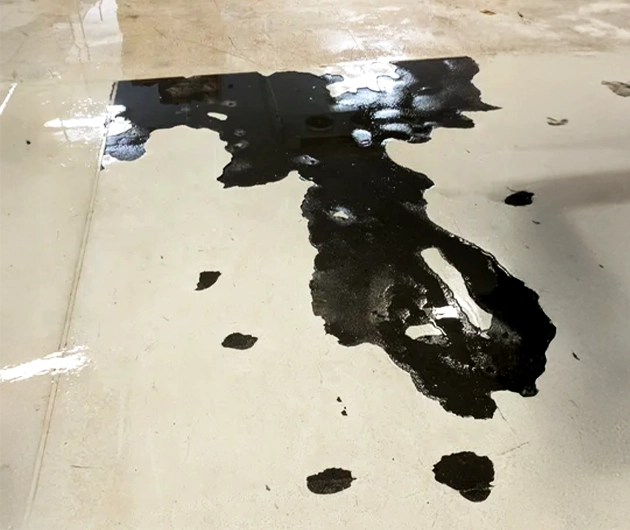
Selecting the flooring is often the most exciting part of building or renovating a premium space. You spend weeks visiting showrooms, touching textures, and finally investing a massive part of your budget into large-format vitrified tiles, luxurious Italian marble, or a sleek, industrial epoxy coating for your commercial parking or showroom. You expect a flawless, mirror-like finish that lasts a lifetime.
Then, the problem begins. A few months after moving in, you walk across the brand-new floor and discover a hollow, drum-like sound beneath a large section of the tiles: a telltale sign of debonding. The neat grout lines between the tiles start cracking, turning into loose powder. Suddenly, with a loud crack, a tile completely debonds and pops upward, a frightening phenomenon known in construction as "tenting." If you invested in a modern epoxy floor, you might walk in one morning to find the coating bubbling, blistering, or peeling away in large, ugly flakes like a bad sunburn.
WhyThis Happens?
The Root Causes of Flooring Failure
Flooring does not fail because you walked on it too hard.
It fails because of poor chemistry, lack of surface preparation, and outdated application methods.
Here are the common mistakes that destroy premium floors:
Using Plain Cement Instead of Adhesives
Ignoring Expansion Joints
Moisture Trapped in the Substrate
Dusty or Weak Base Floors

This is the most common disaster in India. Local masons often lay large, non-porous vitrified tiles using traditional cement and water. Plain cement shrinks as it dries and cannot grip the smooth back of modern tiles. As the temperature changes, the tile pops right off.
Buildings breathe. They expand in the Indian summer heat and contract in the winter. If tiles are laid edge-to-edge ("paper joints") without proper spacers or movement joints, the expanding tiles have nowhere to go but up, causing them to forcefully crack and tent.
If you apply an epoxy coating or lay tiles over a concrete base (screed) that has not fully dried, the trapped moisture eventually tries to escape as vapor. This vapor pressure pushes upward, blowing bubbles in your expensive epoxy and peeling it right off the floor.
If the contractor does not clean and prime the concrete slab properly, the tile adhesive or epoxy ends up sticking to a layer of loose dust rather than the structural floor.
HowINFRAHUB Solves?
The Engineered Pathway
Flooring is not just decoration; it is an engineering system that must handle constant impact and load. INFRAHUB ensures your residential or commercial floors are built to perform flawlessly, applying engineering standards used for high-load infrastructure surfaces.
- 1
Diagnostic Site Inspection
Before tearing anything up, BUILDING Dr. conducts a comprehensive Site Inspection, using specialised tools to check moisture levels in the concrete slab, identify exact areas of debonding, and determine whether the failure is due to structural movement, bad adhesive, or trapped water.
- 2
Chemical Verification at INFRA.CLINIC
Where the material is suspected to be faulty, INFRA.CLINIC — NABL- accredited laboratory tests samples of the failed adhesive, epoxy, or concrete base for shear adhesion strength and chemical composition, producing certified proof of why the failure occurred.
- 3
Engineering Consultation & Specification
BUILDING Dr. stops the guesswork, specifying the exact chemistry for the repair. For large-format tiles, polymer-modified tile adhesives and precise spacer sizes are mandated. For industrial spaces, a multi-layer epoxy system is designed for the specific traffic load.
- 4
Factory-Direct Supply & Application Tools
INFRAHUB supplies the lab-verified primers, adhesives, and epoxy resins directly to the site, ensuring the contractor uses the correct notched trowels and levelling clips to guarantee full contact beneath every tile.
Related Services
Site Inspection & Structural Assessment
Bring BUILDING Dr. to the site for advanced Non-Destructive Testing.
Engineering Consultation
Get a safe, scientifically calculated retrofitting plan.
INFRA.CLINIC Testing
Certify the exact compressive strength of your existing concrete.
Related Products
PROCEMHUB
Access lab-verified waterproofing compounds, epoxy grouts, and elastomeric coatings.
See DetailsWATERHUB
Procure certified CPVC, UPVC, and SWR pipes that are guaranteed to handle high pressure.
See DetailsINTERIOHUB
INFRAHUB supplies specification-grade plywood, laminates, architectural hardware, and wood products.
See DetailsFrequently Asked Questions
Common Questions. Answered Clearly.
Why do my tiles pop up suddenly with a loud cracking noise?
This is called "tenting." It happens when tiles expand due to heat or structural settling, but have no room to move because they were laid without proper expansion gaps or spacers. The built-up pressure eventually forces the tiles to forcefully pop upward off the floor.
Can I fix a hollow tile by injecting cement under it?
Injecting thin cement slurry under a hollow tile is a temporary "jugaad" fix that usually fails. The slurry lacks the chemical polymers required to bond the smooth tile back to the dry concrete. The correct method is to carefully lift the tile, clean the base, and relay it using a high-quality polymer tile adhesive.
Is regular cement good enough for laying vitrified tiles?
No. Vitrified tiles are engineered to have very low water absorption (they are practically glass-like on the back). Traditional cement requires a porous surface to grip onto. To securely bond large vitrified tiles, you must use a polymer-modified tile adhesive designed specifically for non-porous surfaces.
Why is my new epoxy floor blistering and peeling?
Epoxy failure is almost always due to poor surface preparation. If the concrete base was not mechanically ground, was too smooth, had oil spills, or contained trapped moisture when the epoxy was poured, the chemical resin will fail to bond with the concrete, leading to blistering and peeling.